Keeping Our Fire Hydrants, Fire Lanes, and Property Addresses Accessible
When our firefighters respond to emergencies throughout the community, every second matters. Whether responding to a house fire, motor vehicle accident, medical emergency, or other incident, our ability to locate the emergency and access the necessary equipment can make a difference in protecting lives and property.
As we travel throughout town recently responding to alarms and returning to the firehouse, we encountered preventable obstructions that can delay emergency operations. We are asking residents, property owners, and motorists to help us keep our community safe by paying attention to three important areas. Fire Hydrant Obstructions, Fire Lane and Emergency Vehicle Obstructions, Property Address Identification
————————————————————————————
#1. Fire Hydrant Obstructions
Fire hydrants are one of the most important tools firefighters use when fighting a structure fire. When responding to a fire, crews need immediate and unobstructed access to a hydrant to establish a water supply.
What the New York State Fire Code says:
2020 NYS Fire Code, Chapter 5, Sections 507.5.4 and 507.5.5:
“Unobstructed access to fire hydrants must be maintained at all times.
Fire departments must not be deterred or hindered from gaining immediate access to fire protection equipment or hydrants.
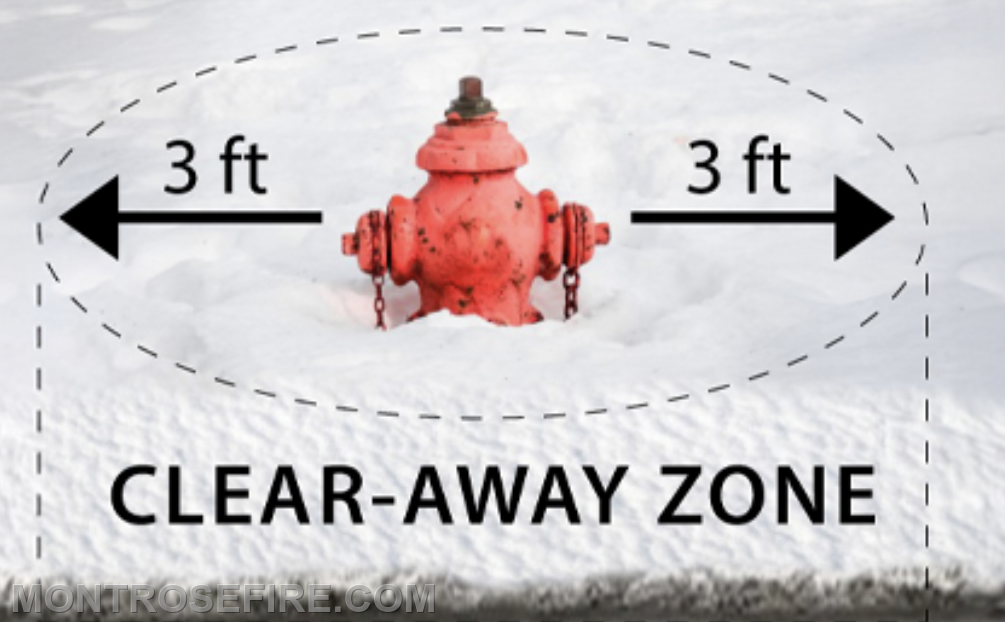
A minimum of 3 feet of clear space must be maintained around the circumference of a fire hydrant, unless otherwise approved or required.
What we see around town:
*Vehicles/Boats/Trailers parked directly in front of or too close to hydrants.
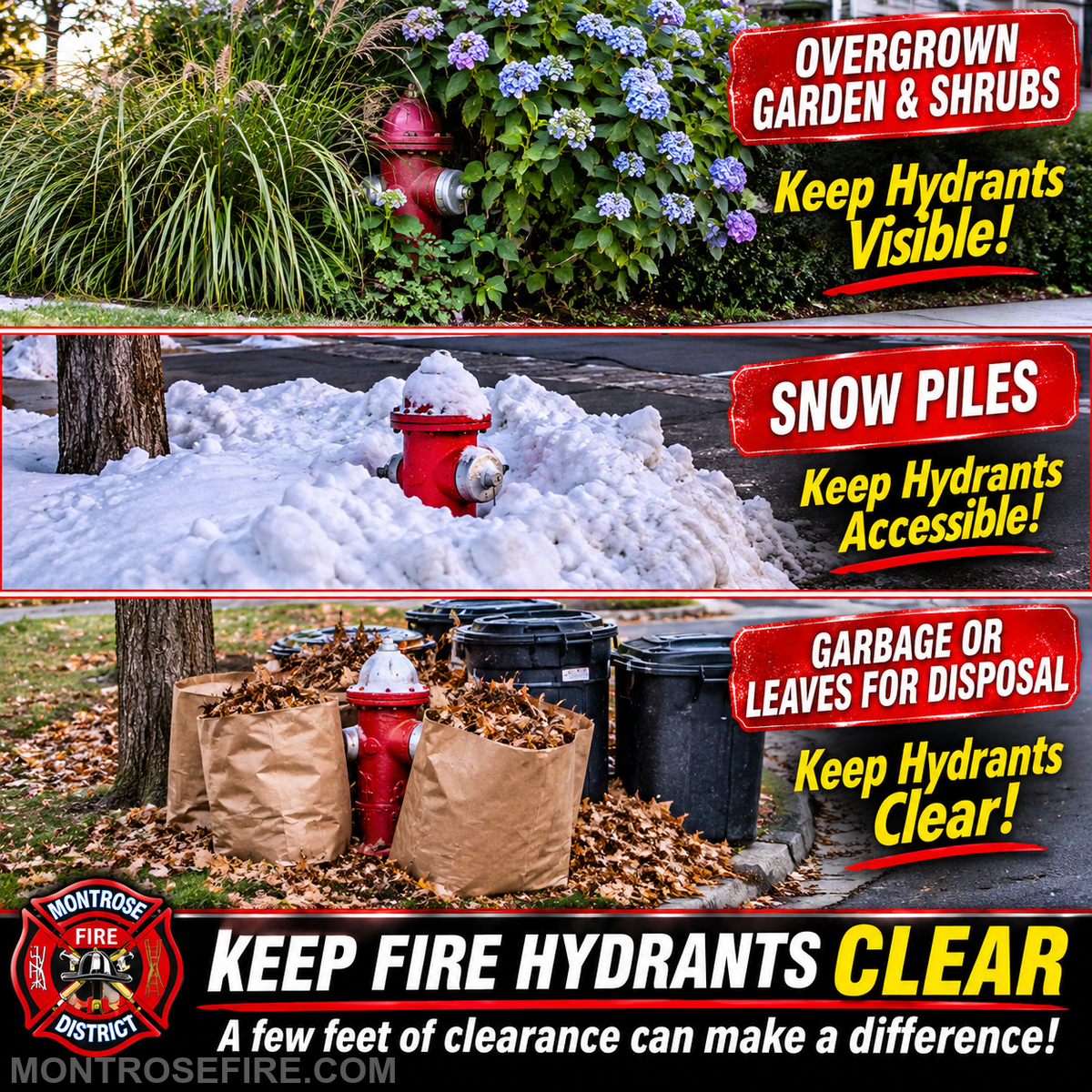
*Bushes, shrubs, landscaping, and fencing restricting access.
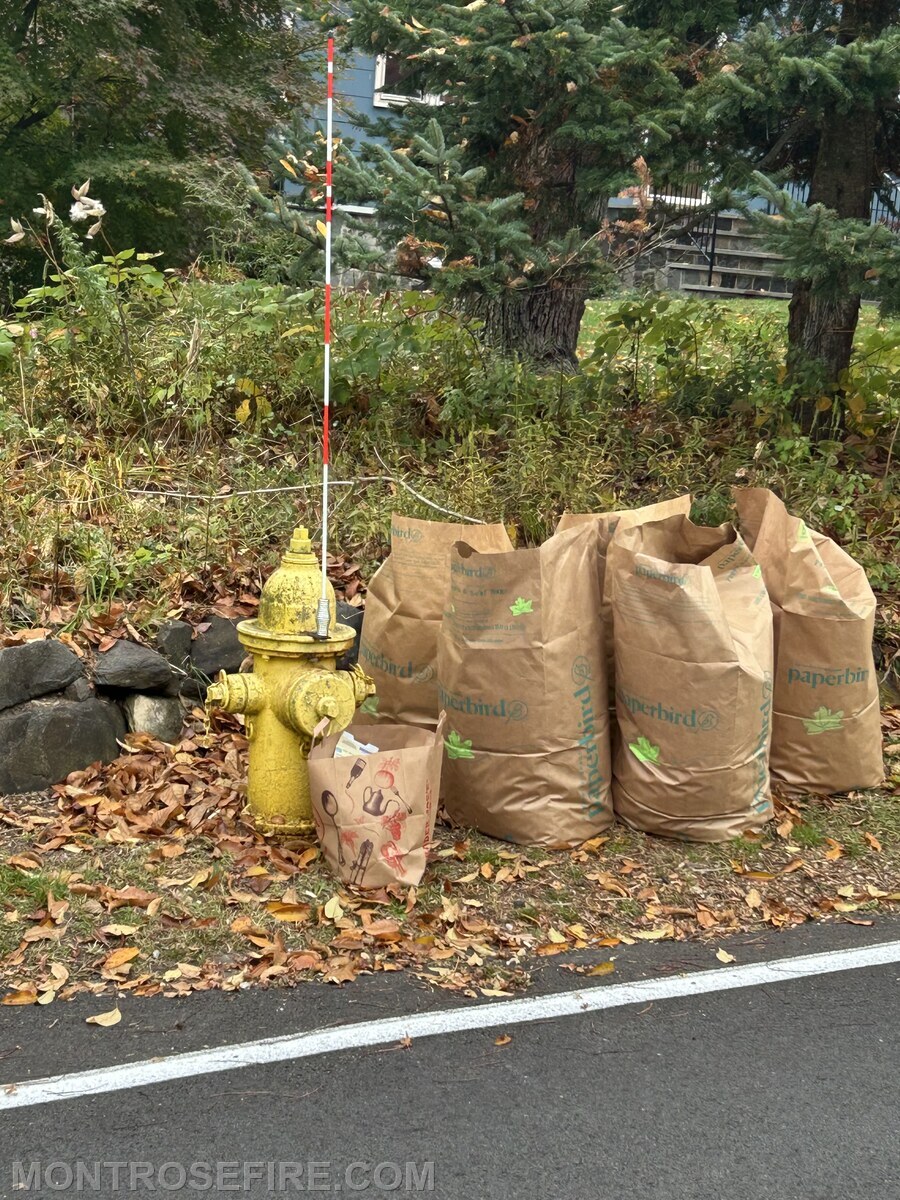
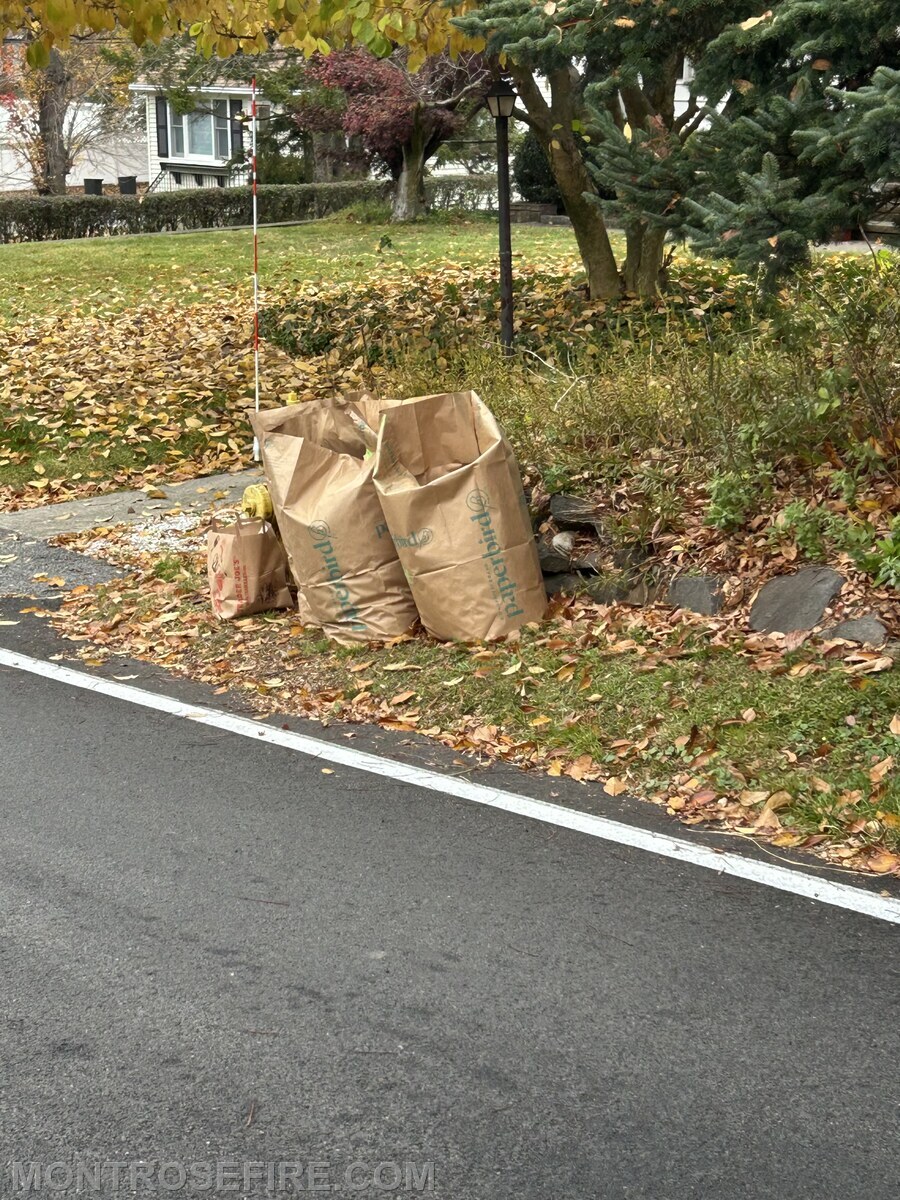
*Garbage cans and recycling containers placed around hydrants.
*Holiday decorations to close or over top of the hydrants
*Snow piles and Leave piles covering hydrants or blocking access during winter and fall months.”
What residents can do:
~Keep hydrants visible and accessible year-round.
~Do not park in front of hydrants, and make sure landscaping, garbage containers, and snow removal do not interfere with firefighter access.
~Remember: A hydrant that cannot be reached immediately can cost valuable time during a fire.
————————————————————————————
#2. Fire Lane and Emergency Vehicle Obstructions
Fire lanes and roadways are designed to provide emergency vehicles with the access they need to reach buildings, businesses, apartment complexes, nursing facilities and residential properties.
When responding to alarms, our firefighters frequently encounter vehicles parked in areas that restrict access or make it difficult for fire apparatus to maneuver safely.
What New York State Vehicle and Traffic Law says:
“NYS Vehicle and Traffic Law, Section 1202, Article 32 addresses stopping, standing, and parking in specified places.
Vehicles generally may not stop, stand, or park within 15 feet of a fire hydrant.
An exception exists when a licensed operator is seated in the front seat and can immediately move the vehicle in an emergency, subject to the law's conditions.
Vehicles must not impair or hinder fire department access to hydrants while fire apparatus is engaged in emergency operations.”
What residents and motorists can do:
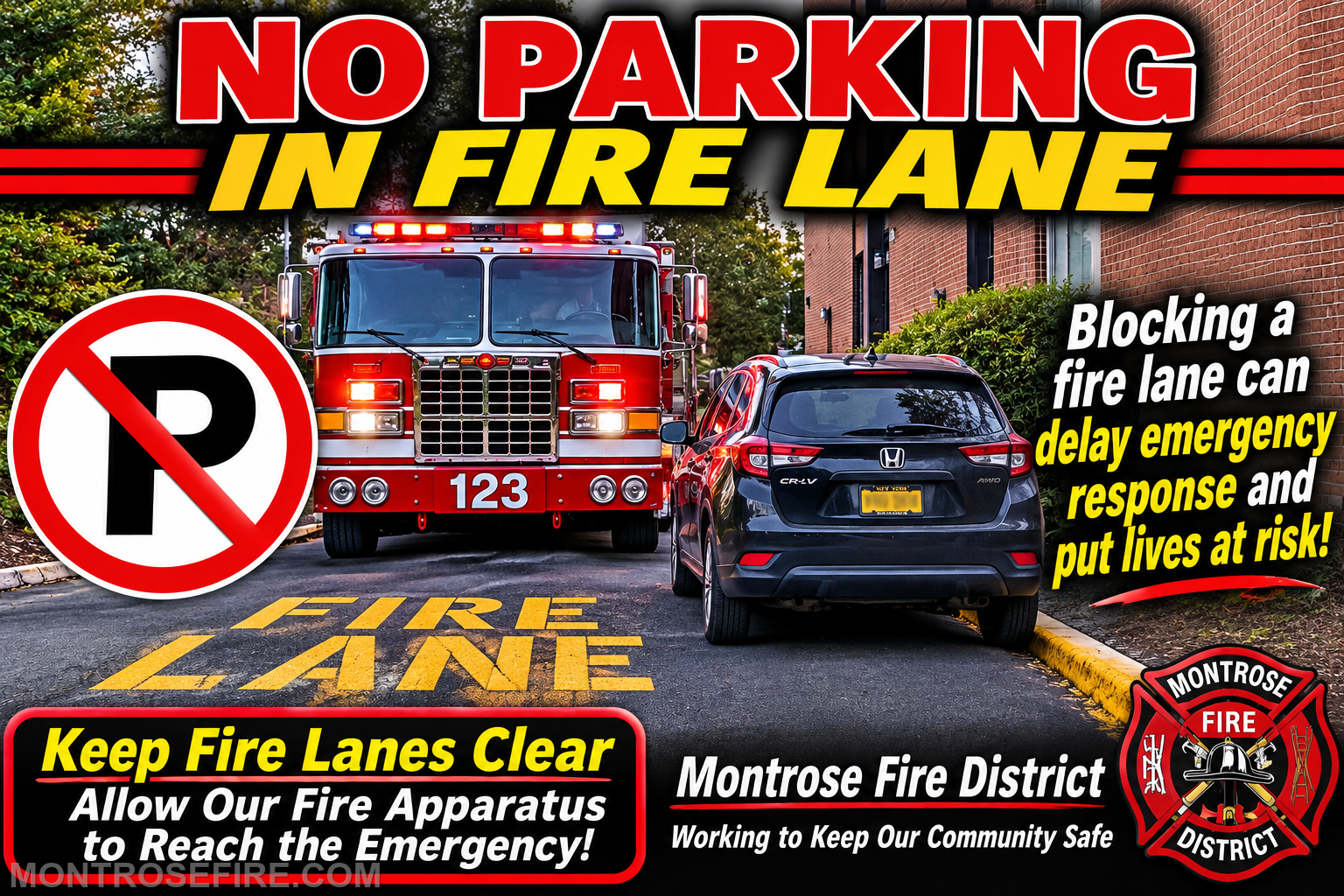
~Never park in a designated fire lane.
~Keep access roads and building entrances clear.
~Do not double-park or block emergency vehicle access.
~Be mindful of the size and turning radius of fire apparatus.
~Follow posted parking restrictions and pavement markings.
~A fire truck cannot always maneuver around an improperly parked vehicle. Even a few minutes of delay can have serious consequences during an emergency.
———————————————————————————
#3. Property Address Identification
When emergency calls come in, firefighters and emergency medical personnel depend on accurate address information to locate the correct property.
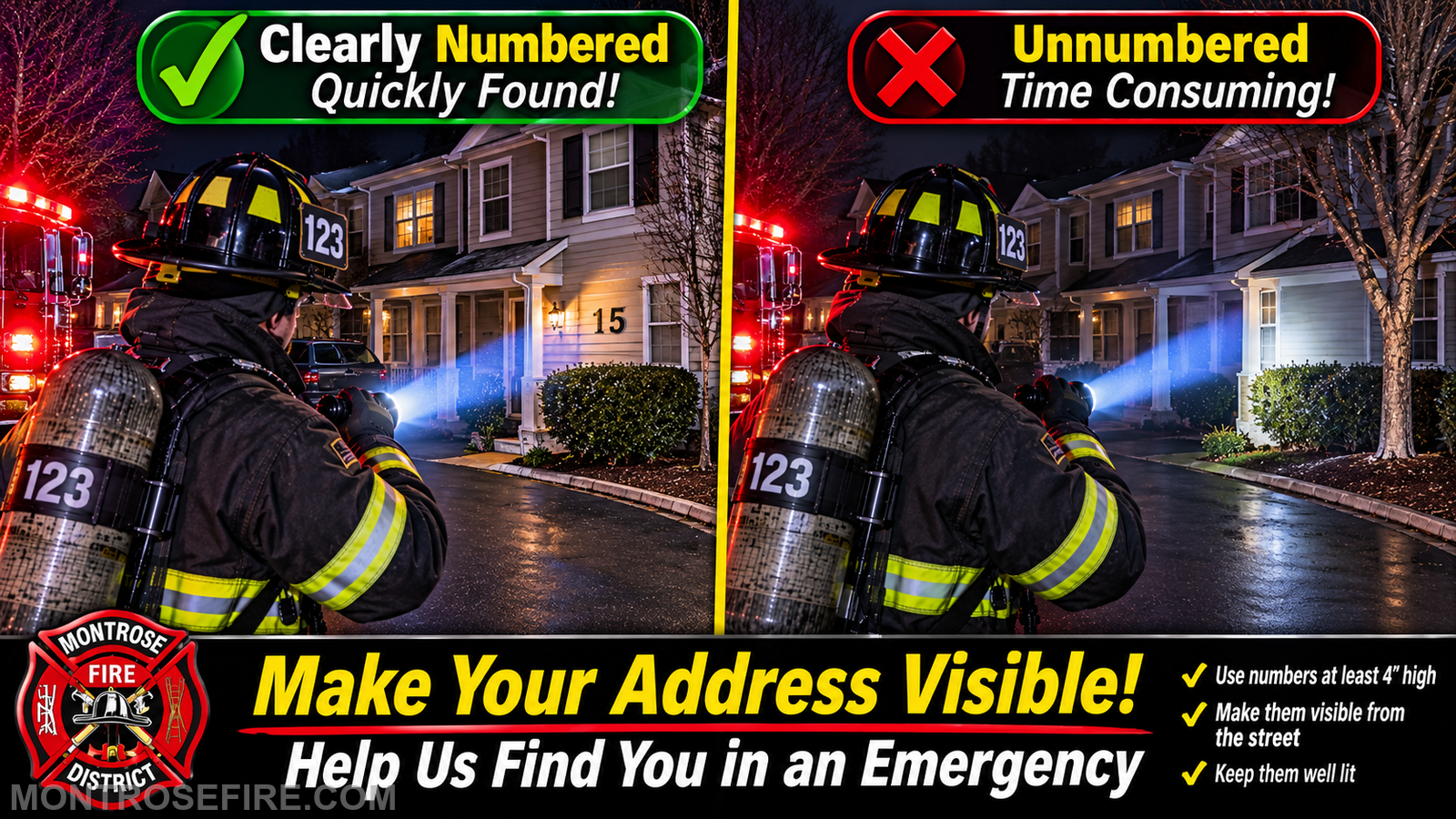
One of the common challenges we encounter when responding to alarms is identifying houses and buildings where the address numbers are missing, too small, faded, poorly lit, or hidden from view.
In an emergency, dispatch may provide the correct address, but that does not always mean responders can easily identify the property from the roadway.
What the New York State Property Maintenance Code says:
2025 NYS Property Maintenance Code, Section “304.3 – Address Identification:
New and existing buildings must have approved address identification.
Address numbers must be legible and visible from the street or road fronting the property.
Numbers must contrast with their background.
Numbers must be at least 4 inches high, with a minimum stroke width of ½ inch.
Additional approved address identification may be required by the fire code official to help emergency responders.
Properties accessed by private roads that cannot be viewed from the public roadway must have a monument, pole sign, or other approved means of identifying the structure.
Address identification must be maintained.”
What we see around town:
*Houses without visible street numbers.
*Numbers hidden behind trees, bushes, or seasonal decorations.
*Faded or damaged numbers that are difficult to read.
*Numbers located on the house but not visible from the roadway.
*Long driveways and private roads where individual homes are difficult to identify.
*Poorly illuminated numbers, especially at night and during bad weather.
What residents can do:
~Make sure your house numbers are at least 4 inches high.
~Place numbers where they can easily be seen from the street.
~Use reflective or contrasting numbers whenever possible.
~Keep landscaping from covering or hiding your numbers.
~Make sure numbers are visible at night.
If your home is located down a long driveway or private road, make sure there is clear address identification at the entrance and at the property.
~Remember: We cannot respond to the correct location if we cannot identify it.” |


 Add a Comment
